
As a veteran slot player, I’ve dedicated numerous hours analysing the workings behind well-known games to provide players a real edge rainbow-riches.eu. Today, I’m turning my knowledge to a real icon of the UK gaming scene: Rainbow Riches. While we all love its delightful theme, understanding its hit frequency is key to converting your play from a standard spin to a strategic session. This breakdown isn’t about promising rare jackpots; it’s about peeling back the mystery on how regularly you can expect winning outcomes to land. I’ll explain what hit frequency means especially for this Barcrest icon, how it functions with the game’s famous bonus rounds, and what that actually means for your budget. Let’s explore the rainbow as one with clear, data-informed predictions.
Risk and Fluctuation in Rainbow Riches
Integrating the hit frequency and payout structure, Rainbow Riches shows medium volatility. This is the ideal point for many UK players. The game offers a steady stream of small-to-medium wins to maintain your balance and periodic bonus features that provide the chance for larger payouts. Controllable variance means extended losing streaks are less common than in high-volatility slots. This balanced gameplay experience won’t drain your funds too quickly but still offers exciting prize potential. This medium volatility is directly linked to that 25% hit frequency. If the hits were more frequent but wins were tiny, volatility would be low. If hits were rare but massive, volatility would be high. Rainbow Riches discovers a compelling middle ground.
The effect of bonus rounds on win frequency
This is where Rainbow Riches really shines. The bonus rounds—Road to Riches, Wishing Well, and Pots of Gold—are not simply standalone rounds; they greatly influence your effective hit frequency during a session. While the base game runs at its ~25% frequency, initiating a special round alters the dynamics. These rounds typically have their own win frequencies and risk. For example, the Wishing Well pick-me game can deliver a certain multiplier reward, essentially meaning a 100% “hit” for that activation. Therefore, a session where you activate one or more bonuses will have a much higher overall return than a session restricted only to standard game plays.
Feature trigger frequency
Understanding how frequently the bonuses themselves show up is a key aspect of the evaluation. The scatter icon (the Rainbow Riches logo) is your gateway to all three features. Landing three or more anywhere on the reels activates the option of bonus. From my analysis and common player feedback, the activation rate for the main bonus is approximately once every 100 plays on average. This may appear uncommon, but it’s meant to be a big moment. The anticipation grows during the main game, and when the rainbow finally appears, it provides a concentrated burst of payout potential. This dual-level design—a steady base game hit rate broken by regular bonus surges—is a primary reason for the slot’s timeless charm.
How does Hit Frequency in Slots operate?
Before we dive into the pot of gold, let’s clarify what we’re actually measuring. Hit frequency, simply put, is the proportion of spins that lead to a winning combination of any size. It’s a key mathematical metric built into the game’s Random Number Generator (RNG). If annualreports.com a slot has a hit frequency of 25%, it means in theory, one in every four spins will produce a win. Critically, this metric says nothing about the size of those wins—a return could be your stake back or a multiple of it. It strictly measures how often the reels ‘entertain’ you with a positive outcome. This is separate from Return to Player (RTP), which is the theoretical percentage of all wagered money a slot pays back over millions of spins. A game can have a high hit frequency with small wins, or a low hit frequency with larger, more volatile payouts.
Why It’s Important for Your Gameplay
Grasping a game’s hit frequency influences your entire approach. For UK players who prefer longer, more engaging sessions without dramatic bankroll swings, a higher hit frequency is often better. It provides a more consistent stream of smaller wins, which can help maintain play and keep the experience enjoyable. This frequency directly impacts a game’s volatility. A high hit frequency typically points to low to medium volatility, meaning wins are frequent but often moderate. Conversely, a low hit frequency indicates high volatility, where wins are less common but can be sizeable when they land. Knowing this helps you pick a game that matches your personal risk tolerance and playing style, ensuring you’re not irritated by long dry spells if you prefer constant action.
Final Insights for the Informed Player
Armed with this analysis, you can now treat Rainbow Riches as more than a game of chance, but as a game with defined mathematical rhythms. Its ~25% hit frequency and medium volatility make it an perfect choice for players seeking fun with balanced risk. Remember, the true charm and profit potential lie in reaching those brilliantly designed bonus rounds. Use the steady hit rate of the base game to your advantage by practising disciplined bankroll management, allowing you to stay in the game long enough for the leprechaun to present you a choice on the Road to Riches. Play within your means, appreciate the iconic soundtrack and visuals, and let the understanding of the game’s mechanics enhance your appreciation of this timeless slot classic. May your spins be lucky and your pots be golden.
Tactical Approach Based on Win Rate
Knowing the hit frequency allows you to create a more strategic plan. For a moderate-frequency game like Rainbow Riches, a patient tactic is likely to yield the best results. I recommend kicking off with a session bankroll that supports at least 200 spins, which gives you a decent chance to encounter the game’s natural variance and possibly unlock a bonus round. Since wins happen approximately every 4-5 spins, resist the temptation to sharply raise your stake after a short losing streak. The maths are intended to stabilize over time. Your primary goal should be to prolong play long enough to benefit from the bonus features, which are the area the most substantial profit potential is found. Controlling your money per spin is your most effective tool.
Fund Management Suggestions
- Establish a Loss Cap: Before you spin, decide on a maximum amount you’re prepared to lose for that session and stick to it strictly.
- Pick a Proper Wager: With a 25% hit rate, your stake should be small enough to survive 20-30 non-winning spins without leading to alarm or draining your funds.
- Monitor Your Spin Results: Silently note the pattern. A cluster of 10 losses in a row is inside normal variance; avoid chasing them by upping your bet.
- Exit on a Win, If Possible: After a solid bonus round win, consider setting aside a portion of the profit rather than immediately re-betting it all.
Rainbow Riches game RTP vs. Payout Frequency
It’s important to differentiate between the game’s published RTP (Return to Player) and its win rate. Rainbow Riches generally has an RTP of around 95%, which is reasonably standard for a traditional slot. This figure represents the long-term long-term percentage of all money wagered that will be paid back to players. The hit frequency of ~25% is the engine that delivers this RTP. The game returns that 95% not through constant tiny wins, but through a mixture of regular small wins and less frequent, larger wins from bonuses and high-value symbol combinations. View RTP as the *what* (the total amount returned) and hit frequency as part of the *how* (the pattern of returns). A high RTP with a remarkably low hit frequency would mean a extremely volatile game with large but uncommon payouts.
In what ways Rainbow Riches Measures up to Alternative Popular UK Slots
When positioned alongside various staples in the UK market, Rainbow Riches’ hit frequency profile is very distinctive. When compared to high-volatility, low-frequency slots like many NetEnt or Playtech jackpot games, Rainbow Riches provides far more consistent engagement. Against low-volatility, high-frequency slots often available on online casinos (sometimes with hit rates above 30%), Rainbow Riches presents more pronounced peak winning potential through its bonuses. It holds a classic, balanced niche similar to other Barcrest greats. This dependable, medium-variance experience is a key reason for its decades-long dominance in pubs, arcades, and online platforms across the UK. It delivers a familiar and trusted rhythm that generations of players have learned to appreciate.
Rainbow Riches Game: Fundamental Game Mechanics
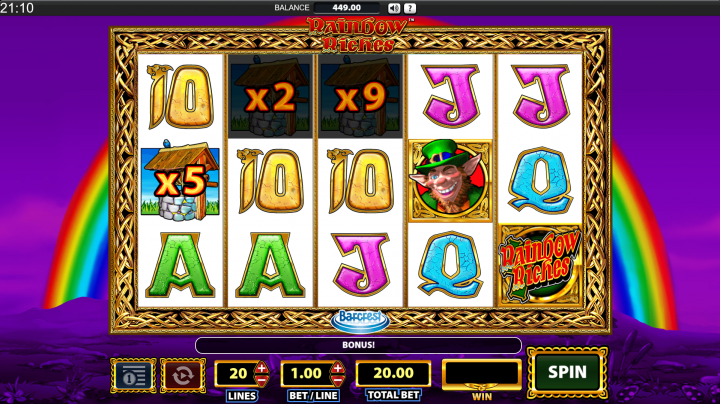
Rainbow Riches is a traditional 5-reel, 3-row video slot with 20 set paylines. Wins are created by landing matching symbols on neighbouring reels beginning from the leftmost reel. The charming Irish theme is supported by straightforward mechanics, rendering a enduring favourite in UK arcades and online casinos. The low-value symbols include the classic 10, J, Q, K, and A, designed with a Celtic twist, while the high-value symbols are thematic icons like a wishing well and a leprechaun’s hat. The leprechaun himself, the wild symbol, stands in for all others save the scatter, which is the Rainbow Riches logo. This underlying setup is crucial because the hit frequency is computed across all these potential winning combinations on the base game reels, before we even take into account the special features that make this slot legendary.
Examining Rainbow Riches Win Rate
So, what is the actual hit frequency for Rainbow Riches? While game providers rarely publish exact figures, extensive playthrough data and community analysis regularly point to a hit frequency in the region of 23-27%. This places it firmly in the medium range. In everyday terms, you can count on a winning combination of some kind approximately every four to five spins on average. This frequency is engineered to deliver a engaging active experience. It’s important to remember this is a long-term statistical average. In a single session, you might experience clusters of wins then longer stretches devoid of a line hit. This natural variance is why handling your stake per spin is so important, letting you to ride out the natural fluctuations while avoiding busting your budget.
How the Paytable Shapes Frequency
The layout of the paytable is the blueprint for the hit frequency. Rainbow Riches employs a even distribution of symbols. The greater number of lower-paying card symbols increases the probability of a line hit, adding significantly to that ~25% frequency. Nevertheless, the payouts for these frequent wins are frequently close to your stake. The higher-value thematic symbols appear less frequently, but when they form part of a winning line, the payout is more substantial. The wild symbol (the leprechaun) is a key factor here, as it can complete winning lines you might otherwise have missed, effectively boosting the real-world hit frequency you experience during a session. This mix keeps the base game seeming active while generating anticipation for the more bonus rounds.
An In-Depth Look at Symbol Distribution
Delving deeper, the symbol weighting on the virtual reels is tuned for balance. The ’10’ and ‘J’ symbols are the most common, making short wins (like two or three-of-a-kind) comparatively frequent. The ‘A’ and the https://www.theguardian.com/society/2023/nov/30/record-revenues-at-uk-gambling-firms-amid-rise-of-online-slot-machines thematic symbols like the harp or hat have a lesser weighting, indicating their appearances are more infrequent but better rewarding. This precise distribution guarantees the game reaches its target frequency and RTP. It’s a textbook example in classic slot design: providing enough small wins to keep up momentum, while ensuring the bigger wins feel special and earned. For the shrewd player, understanding this pattern helps in forming realistic expectations for what a “winning spin” normally resembles in the base game.
Common Misconceptions Regarding Hit Frequency
Numerous players fall into traps stemming from misunderstandings of how hit frequency works. One major myth is the “due for a win” fallacy. The RNG has no memory; every spin is independent. Just because you’ve had 15 losses in a row doesn’t make the 16th spin more likely to win. The 25% frequency is an average over millions of spins, not a guarantee per 100. Another misconception is confusing hit frequency with “big win” frequency. Most of those 25% of winning spins will be returns equal to or slightly above your stake. Finally, some believe bonus features affect the immediate next base game spin, which they do not. Each spin, whether in base play or bonus, is a separate, random event. Dispelling these misconceptions promotes a healthier, more enjoyable gaming mindset.